
Clinical Assessment
We understand your symptoms, medical history, activity level and functional limitations and examine the knee carefully.
At Healio RegenX, we do not start with a procedure. We first diagnose the cause of your knee pain, identify the structure responsible and then choose the most appropriate non-surgical treatment when it is medically suitable.
Orthopaedic + Interventional Pain Management • Diagnosis-first care
When a targeted procedure is appropriate, real-time ultrasound can help the doctor see relevant anatomy and guide treatment toward the intended area.
Knee pain can come from arthritis, cartilage or meniscus problems, ligament or tendon injuries, inflammation, bursitis or other musculoskeletal conditions. Two people can have similar pain but need completely different treatment.
We understand your symptoms, medical history, activity level and functional limitations and examine the knee carefully.
X-ray, ultrasound, MRI or other investigations may be used when they can answer an important clinical question.
We work to determine which structure or condition is most likely responsible for your symptoms.
Only after diagnosis do we decide whether rehabilitation, medication, injection, regenerative care, an image-guided procedure or surgery is appropriate.
For appropriate patients, ultrasound guidance allows the doctor to visualise the relevant anatomy in real time during a targeted procedure. Instead of relying only on surface landmarks, the treatment can be guided to the intended anatomical area.
Ultrasound can help visualise selected tendons, bursae, joints and other soft-tissue structures during assessment and procedures.
When clinically indicated, ultrasound can help guide a needle or procedure toward the intended treatment area.
The procedure is selected according to the actual diagnosis, not simply because a patient has knee pain.
Ultrasound-guided musculoskeletal procedures are used internationally because real-time imaging can help clinicians visualise anatomy and improve procedural targeting. At Healio RegenX, we apply this principle as part of a diagnosis-first treatment pathway, using ultrasound when it is clinically appropriate rather than using it as a one-size-fits-all procedure.
Image-guided, anatomy-specific treatment is an established part of modern musculoskeletal and interventional pain practice.
We combine proper diagnosis with targeted non-surgical treatment and use ultrasound guidance when it adds clinical value.
Early or moderate degenerative knee pain may be managed with rehabilitation, activity guidance, pain-management options and selected procedures.
The appropriate plan depends on the type, location and severity of the problem and the symptoms it is causing.
Targeted rehabilitation and selected image-guided treatments may be considered for appropriate tendon or soft-tissue conditions.
Assessment helps determine whether rehabilitation, bracing, pain management or another treatment pathway is appropriate.
When pain continues despite previous treatment, reassessment can help identify whether the original diagnosis or treatment plan needs to change.
PRP and GFC may be discussed for selected musculoskeletal conditions after a proper diagnosis and informed clinical discussion.
Regenerative treatments are not suitable for every knee problem. At Healio RegenX, PRP and Growth Factor Concentrate (GFC) are considered only after assessment of the diagnosis, severity and treatment goals.
A blood-derived treatment that concentrates platelets and may be considered for selected musculoskeletal conditions.
An advanced regenerative option offered at Healio RegenX for appropriate cases. Suitability and expected outcomes vary by diagnosis.
For some appropriately diagnosed knee conditions, effective non-surgical management may reduce the need for surgery. However, the result depends on the diagnosis, severity, structural damage and individual response.
Claims such as “50–60% of surgeries can be avoided” or “zero side effects” are not appropriate guarantees for every patient. Ultrasound guidance can improve procedural targeting, but every medical procedure has potential risks and no treatment can guarantee immediate pain relief or zero side effects.
Some patients may experience pain relief soon after a targeted procedure, while others need time, rehabilitation or additional treatment. Our priority is accurate diagnosis, appropriate treatment selection and realistic expectations.
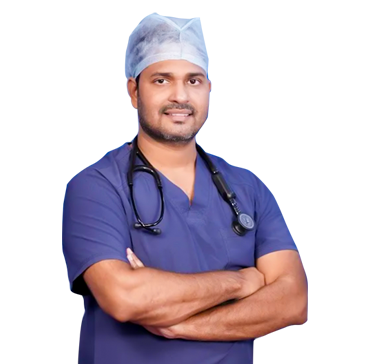
MBBS, MS – Orthopaedics
Consultant Orthopaedic Surgeon
Sports Medicine, Spine, Trauma & Joint Replacement

MBBS, MD, FIPM
Interventional Pain Specialist
Advanced pain management and musculoskeletal care
When the diagnosis and clinical findings indicate that surgery is not currently necessary, a non-surgical pathway may include rehabilitation, activity modification, pain management, injections or regenerative options.
Knee pain is a symptom. Identifying whether the pain comes from arthritis, meniscus, tendon, ligament, inflammation or another source helps the doctor choose a treatment that matches the problem.
Ultrasound can be useful when the relevant anatomy can be visualised and an image-guided procedure may add precision. It is used when clinically appropriate.
Surgery may be appropriate for certain severe injuries, advanced structural damage, instability or conditions that do not respond to appropriate non-surgical management. A specialist should assess the individual case.
Many knee conditions can initially be managed without surgery. Whether this is appropriate depends on the diagnosis, severity, structural damage, symptoms and individual circumstances.
It is a procedure in which real-time ultrasound is used to visualise relevant anatomy and guide an appropriate treatment toward the intended area.
It may help some appropriately diagnosed patients manage pain without surgery, but it cannot guarantee that surgery will be avoided. Some conditions still require surgery.
Some targeted procedures may provide early pain relief, but response varies by diagnosis, procedure and patient. Immediate relief is not guaranteed.
No medical procedure can honestly be guaranteed to have zero side effects. Your doctor should explain the expected benefits, risks and alternatives before treatment.
Yes. Healio RegenX follows a diagnosis-first approach. The clinical examination and appropriate investigations help determine whether a non-surgical option is suitable.
No. PRP and GFC are not appropriate for every diagnosis. The doctor decides whether either option fits the individual clinical situation.
Surgery may be considered for advanced structural damage, significant instability, certain injuries or persistent symptoms when appropriate non-surgical management has not achieved the desired result.
Start with a proper diagnosis and understand whether an advanced non-surgical treatment pathway may be appropriate for you.
Call 8181945945