
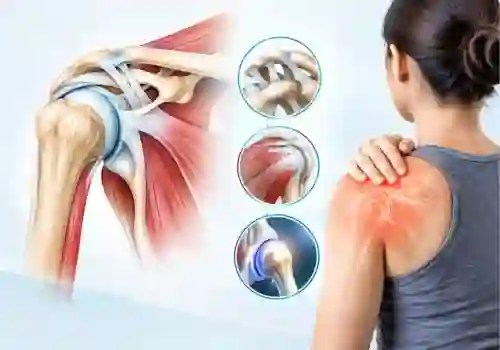
The shoulder joint is one of the most mobile joints in the human body. It allows us to lift, rotate and move the arm in different directions, making everyday activities such as reaching overhead, dressing, lifting objects and exercising possible.
However, this wide range of movement also makes the shoulder more vulnerable to stiffness, inflammation, instability and injury.
Understanding shoulder joint anatomy, including its bones, muscles, tendons and shoulder joint ligaments, can help you better understand common causes of shoulder pain and when professional treatment may be needed.
What Is the Shoulder Joint?
The shoulder is not just a single joint. It is a complex system involving bones, joints, muscles, tendons and ligaments that work together to provide stability and movement.
The main bones involved are:
- Humerus – the upper arm bone
- Scapula – the shoulder blade
- Clavicle – the collarbone
The rounded head of the humerus fits into the shallow socket of the scapula, called the glenoid. This ball-and-socket arrangement provides the shoulder with its exceptional mobility.
Shoulder Joint Anatomy: The Main Structures
A healthy shoulder depends on several structures working together.
1. Glenohumeral Joint
This is the primary shoulder joint where the head of the humerus meets the glenoid socket.
It is responsible for most shoulder movements, including lifting and rotating the arm.
2. Acromioclavicular Joint
The acromioclavicular, or AC joint, connects the clavicle to the acromion of the shoulder blade.
It helps with shoulder blade movement and stability.
3. Sternoclavicular Joint
This joint connects the collarbone to the sternum. It plays an important role in connecting the arm and shoulder girdle to the rest of the skeleton.
4. Scapulothoracic Movement
Although it is not a conventional joint, the movement of the scapula over the rib cage is essential for normal shoulder function.
Together, these structures allow the shoulder to perform a wide range of movements.
Shoulder Joint Ligaments: What Do They Do?
Shoulder joint ligaments are strong bands of connective tissue that help stabilise the shoulder.
Important ligaments include:
- Glenohumeral ligaments
- Coracohumeral ligament
- Acromioclavicular ligament
- Coracoclavicular ligaments
These structures help keep the shoulder stable while allowing the necessary movement.
Damage to the ligaments can contribute to shoulder instability, particularly following an injury or dislocation.
The Rotator Cuff and Shoulder Stability
The rotator cuff is a group of four muscles and their tendons that help stabilise the shoulder and control movement.
They include:
- Supraspinatus
- Infraspinatus
- Teres minor
- Subscapularis
Rotator cuff problems are among the common causes of shoulder pain and can affect lifting, reaching and rotational movements.
What Causes Shoulder Joint Pain?
Shoulder joint pain can develop for many reasons. Common causes include:
- Rotator cuff problems
- Frozen shoulder
- Shoulder instability
- Arthritis
- Tendon or ligament injuries
- Bursitis
- Shoulder dislocation
- Sports injuries
- Trauma
The exact cause cannot always be identified from symptoms alone. A proper clinical assessment helps determine which structure is responsible for the pain.
Common Symptoms of Shoulder Problems
Depending on the underlying condition, you may experience:
- Shoulder pain while moving the arm
- Shoulder stiffness
- Difficulty raising the arm
- Pain while sleeping on the affected side
- Weakness in the shoulder
- Reduced range of motion
- Clicking or catching sensations
- Pain during sports or overhead activities
Persistent or worsening symptoms should be evaluated by an orthopaedic or pain specialist.
Shoulder Joint Pain Treatment
The appropriate shoulder joint pain treatment depends on the underlying cause, severity of the condition and the patient’s individual needs.
Treatment may include:
- Activity modification
- Physiotherapy and rehabilitation
- Medicines when appropriate
- Pain-management procedures
- Image-guided injections when clinically indicated
- Regenerative treatment options in suitable cases
- Surgical treatment when necessary
Not every shoulder problem requires surgery. The goal is to identify the cause of pain and choose the most appropriate treatment for that particular condition.
What Makes Healio RegenX Different for Shoulder Care?
At Healio RegenX Advanced Orthopaedics & Pain Management, shoulder care combines orthopaedic expertise with specialised pain-management approaches.
Rather than focusing only on pain relief, the treatment approach aims to understand the underlying problem and improve function and mobility.
A Combined Orthopaedic & Pain Management Approach
Dr. Kartheek Telagareddy
MBBS, MS – Orthopaedics
Consultant Orthopaedic Surgeon specialised in Sports Medicine, Spine, Trauma & Joint Replacement.
Dr. Bhargavi Rayapureddy
MBBS, MD, FIPM – Interventional Pain Specialist
Focused on advanced pain management and personalised treatment for musculoskeletal conditions.
This combination allows patients to access both orthopaedic and interventional pain-management expertise under one care approach. Healio RegenX also provides regenerative medicine, physical therapy and rehabilitation, advanced pain management, and lifestyle and nutritional counselling.
Personalised Treatment Plans
Every shoulder problem is different. At Healio RegenX, treatment is planned according to the patient’s symptoms, clinical findings, condition and recovery goals rather than following a single approach for everyone.
Surgical and Non-Surgical Options
Depending on the diagnosis, patients may be considered for conservative or non-surgical care, interventional pain-management procedures, rehabilitation, regenerative approaches or surgery when appropriate.
This gives patients access to a broader range of treatment pathways under specialist guidance.
When Should You See a Shoulder Specialist?
Consider professional evaluation if your shoulder pain:
- Continues for several days or keeps returning
- Limits normal arm movement
- Causes significant stiffness
- Develops after an injury
- Is associated with weakness or instability
- Interferes with sleep or daily activities
Early assessment can help identify the underlying cause and guide appropriate treatment.
How Is Shoulder Joint Pain Diagnosed?
Diagnosis usually begins with a detailed discussion of your symptoms and a physical examination.
Depending on the suspected condition, your doctor may recommend imaging such as an X-ray, ultrasound or MRI. The choice of imaging depends on the symptoms and clinical findings.
Frequently Asked Questions
Q : What is the shoulder joint?
Ans : The shoulder is a complex structure involving the humerus, scapula and clavicle, along with multiple joints, muscles, tendons and ligaments that work together to provide movement and stability.
Q : What are the main shoulder joint ligaments?
Ans : Important shoulder ligaments include the glenohumeral, coracohumeral, acromioclavicular and coracoclavicular ligaments.
Q : What causes shoulder joint pain?
Ans : Shoulder pain can result from rotator cuff problems, frozen shoulder, arthritis, instability, bursitis, injuries and other musculoskeletal conditions.
Q : What is the best shoulder joint pain treatment?
Ans : There is no single treatment that is best for every patient. Treatment depends on the underlying diagnosis and may range from rehabilitation and medication to interventional procedures or surgery.
Q : Can shoulder pain be treated without surgery?
Ans : Many shoulder conditions can initially be managed with non-surgical approaches such as physiotherapy, activity modification, pain management and other appropriate treatments. However, treatment depends on the specific condition.
Shoulder Care at Healio RegenX
If shoulder pain, stiffness or restricted movement is affecting your daily life, a proper evaluation can help identify the underlying cause.
Healio RegenX Advanced Orthopaedics & Pain Management provides personalised shoulder and musculoskeletal care through a combination of orthopaedic treatment, pain management, rehabilitation and other suitable treatment options.
Locations: Banjara Hills & Bandlaguda Jagir / Suncity, Hyderabad
Free Tele consultation Available
Contact: 81819 45945
Treatment recommendations should be based on an individual clinical evaluation. This article is intended for general educational purposes and does not replace medical consultation.
